
Calendar Layout
The Calendar layout places work items on a visual calendar based on their due dates. Each item appears as a chip on the day it is due, giving you an immediate overview of upcoming deadlines and workload distribution across time. This layout is ideal for teams that plan around fixed dates, client deliverables, or time-boxed cycles.
When to use the Calendar layout
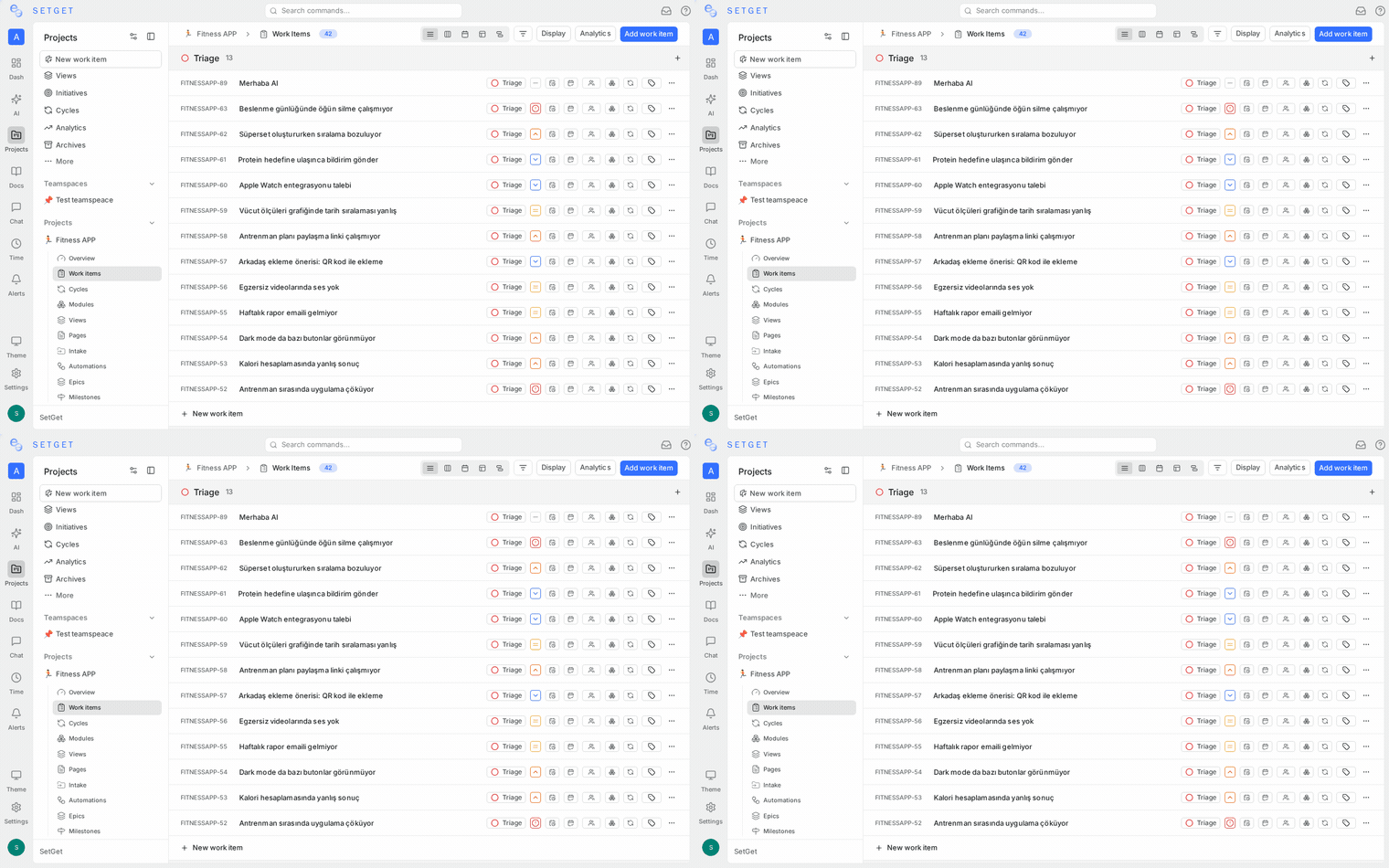
- You need to see what is due each day or week at a glance.
- You want to balance workload across days by spotting overloaded dates visually.
- You plan work by moving items to specific dates.
- You are managing deliverables with external deadlines.
For timeline-based planning with start and end dates, use the Gantt chart. For flow-based management, use Kanban.
Month and week views
The Calendar layout offers two zoom levels:
| View | Shows | Best for |
|---|---|---|
| Month | A full calendar month with days in a grid | Long-range planning, spotting busy weeks |
| Week | A single week with expanded day columns | Detailed daily planning, daily standups |
Switch between views
- Use the Month / Week toggle in the toolbar.
- The calendar re-renders immediately.
Navigate dates
| Control | Action |
|---|---|
| Left arrow | Go to the previous month or week |
| Right arrow | Go to the next month or week |
| Today button | Jump to the current date |
Items placed by due date
Work items appear on the calendar on the day matching their due date property. Items without a due date are not displayed on the calendar.
TIP
If you have many items without due dates, switch to the List layout first, sort by priority, and assign due dates. Then return to the Calendar layout to see the result.
What each item chip shows
Each chip on the calendar displays:
| Element | Description |
|---|---|
| Identifier | Project-prefixed ID (e.g., PROJ-42) |
| Title | Truncated title text |
| State icon | Small colored dot or icon |
| Priority icon | Priority indicator (when color coding is not active) |
Additional properties can be enabled via Display Properties in the toolbar.
Drag to change dates
Reschedule a work item by dragging its chip to a different day:
- Click and hold the item chip.
- Drag it to the target date cell.
- Release to drop. The item's due date is updated immediately.
In week view, you can also drag within the same day to reorder items visually (manual sort order).
WARNING
Dragging an item changes only the due date. It does not change the start date. If you need to move both dates together, use the Gantt chart where you can drag timeline bars to shift both dates simultaneously.
Create items on the calendar
You can create a new work item directly on a specific date:
- Click the + icon that appears when you hover over a day cell.
- Type a title in the inline input that appears.
- Press Enter to create the item.
The new work item is created with its due date set to the clicked day and default values for all other properties (Backlog state, no priority, no assignee). Open the item to add more details.
Create from empty days
On days with no items, clicking anywhere in the cell opens the quick-create input. This makes it fast to plan ahead by clicking through empty future dates.
Color coding
Color coding helps you visually distinguish items on the calendar without reading each chip:
| Color code by | How it works |
|---|---|
| State | Each chip is colored according to its workflow state (e.g., green for Done, blue for In Progress, grey for Backlog) |
| Priority | Each chip is colored by priority level (red for Urgent, orange for High, yellow for Medium, blue for Low, grey for None) |
| Label | Each chip takes the color of its first assigned label |
Set color coding
- Open Display Options in the toolbar.
- Select a value for Color by (State, Priority, or Label).
- The calendar updates immediately.
TIP
Use Priority color coding during triage weeks to quickly spot which days have too many urgent items. Use State color coding during execution to see at a glance how many items per day are still in Backlog versus In Progress.
Overflow handling
When more items are due on a single day than can fit in the cell, the calendar handles overflow gracefully:
| Behavior | Description |
|---|---|
| Visible items | The first several items are displayed as chips |
| Overflow indicator | A "+N more" link appears at the bottom of the cell |
| Click overflow | Clicking "+N more" expands the day into a popover showing all items for that date |
In month view, each cell typically shows 3-4 items before overflowing. In week view, cells are taller and can show more items before the overflow trigger.
Reduce overflow
If too many days show overflow indicators:
- Apply filters to show only the items relevant to your current task (for example, filter to a specific assignee or cycle).
- Switch to week view for more vertical space per day.
- Use grouping to separate items by state or priority (grouped calendars show swimlane-style rows).
Filtering on the calendar
All standard filters work on the Calendar layout. Common filter combinations for calendar use:
| Filter combination | Purpose |
|---|---|
| Assignee = Me | See only your own deadlines |
| Cycle = Current Sprint | Focus on the current sprint's due dates |
| State != Done, Cancelled | Hide completed items to see remaining work |
| Priority = Urgent, High | See only high-priority deadlines |
| Label = Client Deliverable | Track external commitments |
Items without due dates
Items that have no due date set do not appear on the calendar. This is by design — the calendar is a date-focused view. To find items without due dates:
- Switch to the List layout.
- Sort by Due Date ascending.
- Items without due dates appear at the end of the list.
- Assign due dates as needed, then return to the Calendar layout.
Multi-day items
If a work item has both a start date and a due date that span multiple days, the calendar can render it as a bar spanning from start to end:
| View | Multi-day rendering |
|---|---|
| Month | A horizontal bar spanning across day cells |
| Week | A horizontal bar spanning across day columns |
This makes it easy to see item duration alongside single-day items. To see full timeline detail with dependency arrows, switch to the Gantt chart.
Keyboard shortcuts
| Shortcut | Action |
|---|---|
Left / Right | Navigate to previous / next period |
T | Jump to today |
Enter | Open the focused item |
C | Create a new item on the focused day |
Troubleshooting
Items are not appearing on the calendar
Only items with a due date appear on the calendar. If an item is missing, open it and verify that a due date is set.
Dragging an item does not update the date
Make sure you are dragging the item chip itself, not clicking on a property badge within the chip. If the issue persists, refresh the page and try again.
Too many items on a single day
Use filters to reduce the scope (e.g., filter to your assignments only or a single cycle). Alternatively, switch to week view for more vertical space per day.
Related pages
- Views Overview — Save calendar configurations as reusable views.
- Gantt Chart — Plan timelines with start and end dates.
- List Layout — Text-dense list for items without dates.
- Kanban Board — Flow-based visual management.
- Display Options — Configure color coding and display properties.
- Filters — Narrow down which items appear on the calendar.
- Work Items Overview — Set due dates and start dates on work items.